
Do we have high inflation or low inflation? This has become an area of confusion lately.
For many investors, 2.5%-ish has become the mental dividing line between "high" and "low" inflation. But June's data showed Core PCE at 3.3% vs. Core CPI at 2.6%, and the gap is expected to persist: the Cleveland Fed's nowcast projects Q3 Core PCE at around 3.0%, while Core CPI is expected to dip to 1.9%—below the Fed's 2% target.
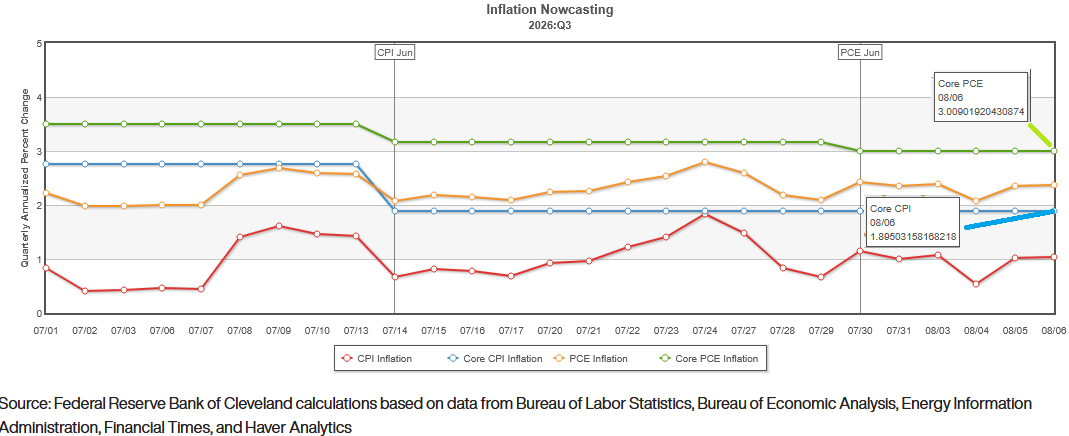
Core PCE and Core CPI are both intended to track the same underlying inflation. However, differences in weighting, formula construction, and spending coverage create a persistent gap between the two measures, often referred to as the inflation wedge.
Since late 2025, that wedge has turned positive - not a problem in itself, but the fact that Core PCE continues to show elevated inflation while Core CPI suggests inflation is back at target poses a challenge for the Fed, its new Chair, and investors on both Wall Street and Main Street.
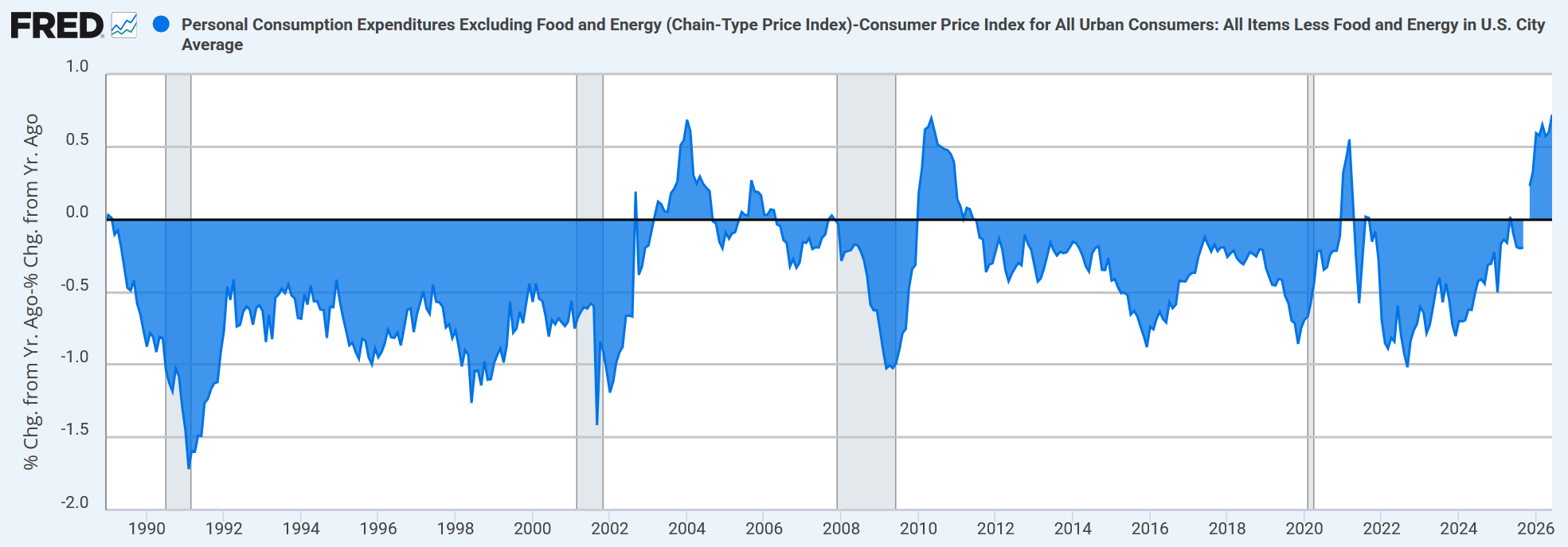
What is driving the recent positive inflation wedge?
1️⃣ 𝗦𝗵𝗲𝗹𝘁𝗲𝗿 is weighted much 𝗺𝗼𝗿𝗲 𝗵𝗲𝗮𝘃𝗶𝗹𝘆 𝗶𝗻 𝗖𝗣𝗜, contributing to both the current positive wedge and the negative wedge during 2022–2024.
2️⃣ 𝗦𝗲𝗿𝘃𝗶𝗰𝗲𝘀, including healthcare, financial services, business services, and other categories, 𝗰𝗮𝗿𝗿𝘆 𝗹𝗮𝗿𝗴𝗲𝗿 𝘄𝗲𝗶𝗴𝗵𝘁𝘀 𝗶𝗻 𝗣𝗖𝗘, helping keep it higher recently.
AI has NOT officially appeared in the inflation measures, but there are potential indirect effects:
- AI investment in healthcare and other sectors may be supporting demand for skilled labor and related services.
- Demand has strengthened for financial, consulting, cloud, and other business services associated with the AI buildout.