
January Performance Overview
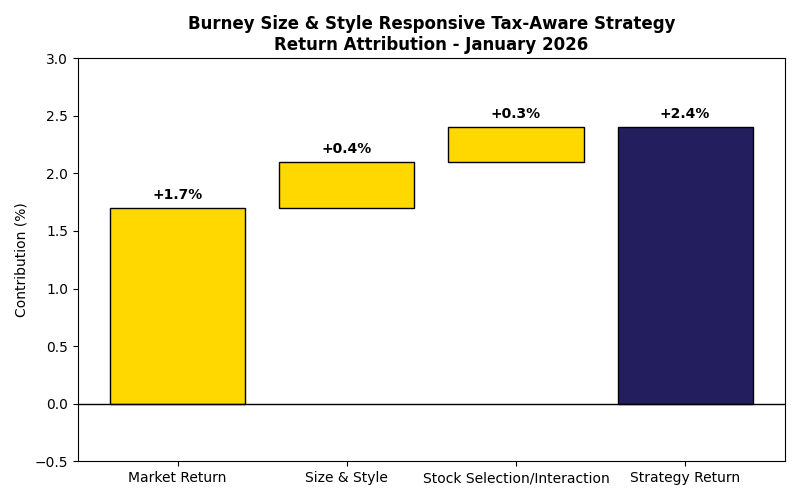
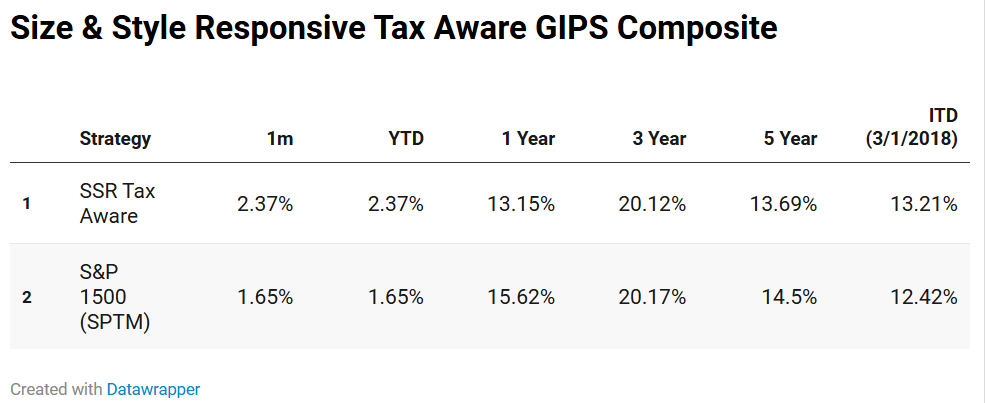
In January, the Size & Style Responsive (SSR) Tax-Aware portfolio returned 2.4%, beating the S&P 1500's return of 1.7%.
Performance was driven primarily by stock selection and the interaction between stock selection and size & style. This indicates that the strategy held a combination of stocks such that the overperforming stocks made up a larger share of the total portfolio than underperforming stocks. Below is a breakdown of the performance attribution:
- Market Return: +1.7%
- Size & Style Effects: +0.4%
- Stock Selection/Interaction Effect: +0.3%
- Strategy Return: +2.4%
Portfolio Construction & Allocation Framework
Our portfolio continues to follow the size and style allocation guidance implemented in mid-2025, which reflects our systematic factor signals and long-term diversification objectives.
Overall Portfolio
The table below shows the allocation of the portfolio by size and style.
This framework defines:
- Overall exposure to Large vs. SMID companies
- The split between Value and Growth within each size segment
These targets evolve as factor signals change, but remain anchored to maintaining diversified exposure across market regimes.
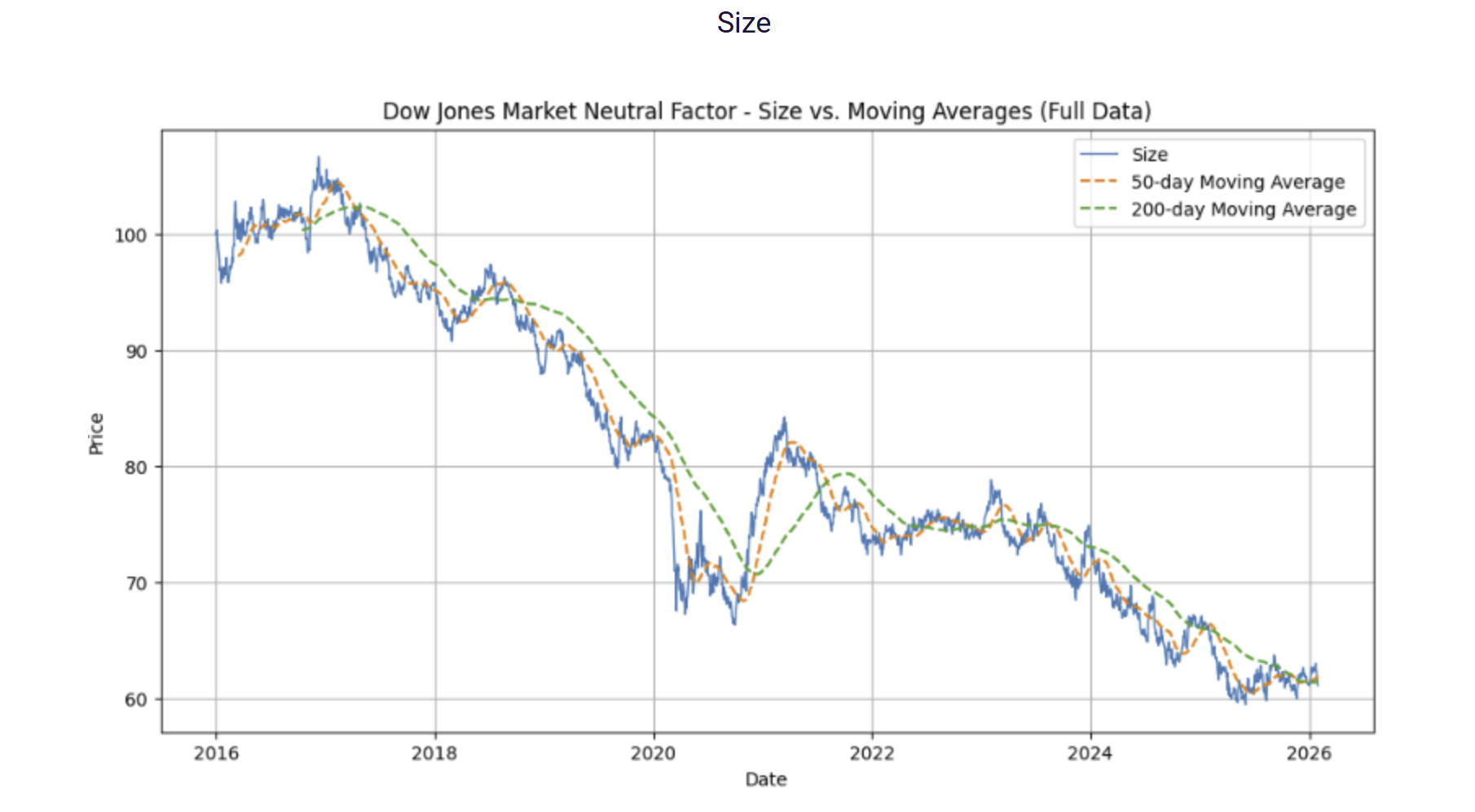
Size Factor Signal
The size signal strengthened slightly in January but overall remains weak. Smaller companies continue to underperform larger companies on a relative basis, though the gap between them is getting smaller, which is mostly driven by weaker performance at larger companies.
Style Factor Signals
Large-Cap Style
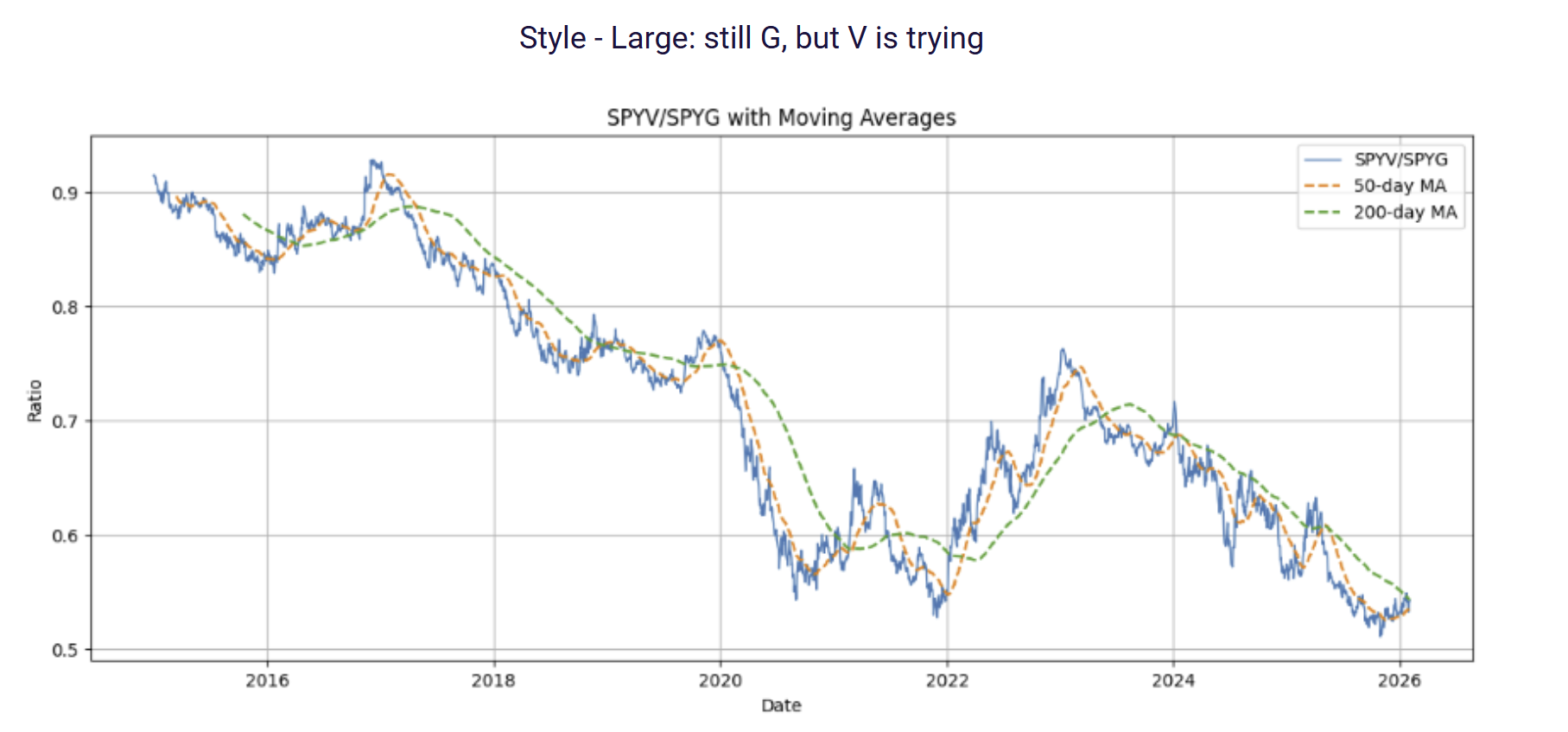
Within large cap, growth remains the dominant longer-term trend, though value has done well over the past several months. It still remains to be seen whether the value trend persists in the long-term.
From a size and style perspective, performance in January was mixed across segments. Our tilt toward large-cap growth continued to detract from returns during the month, as growth lagged value within the large-cap universe, though the gap between the two is shrinking.
SMID Style
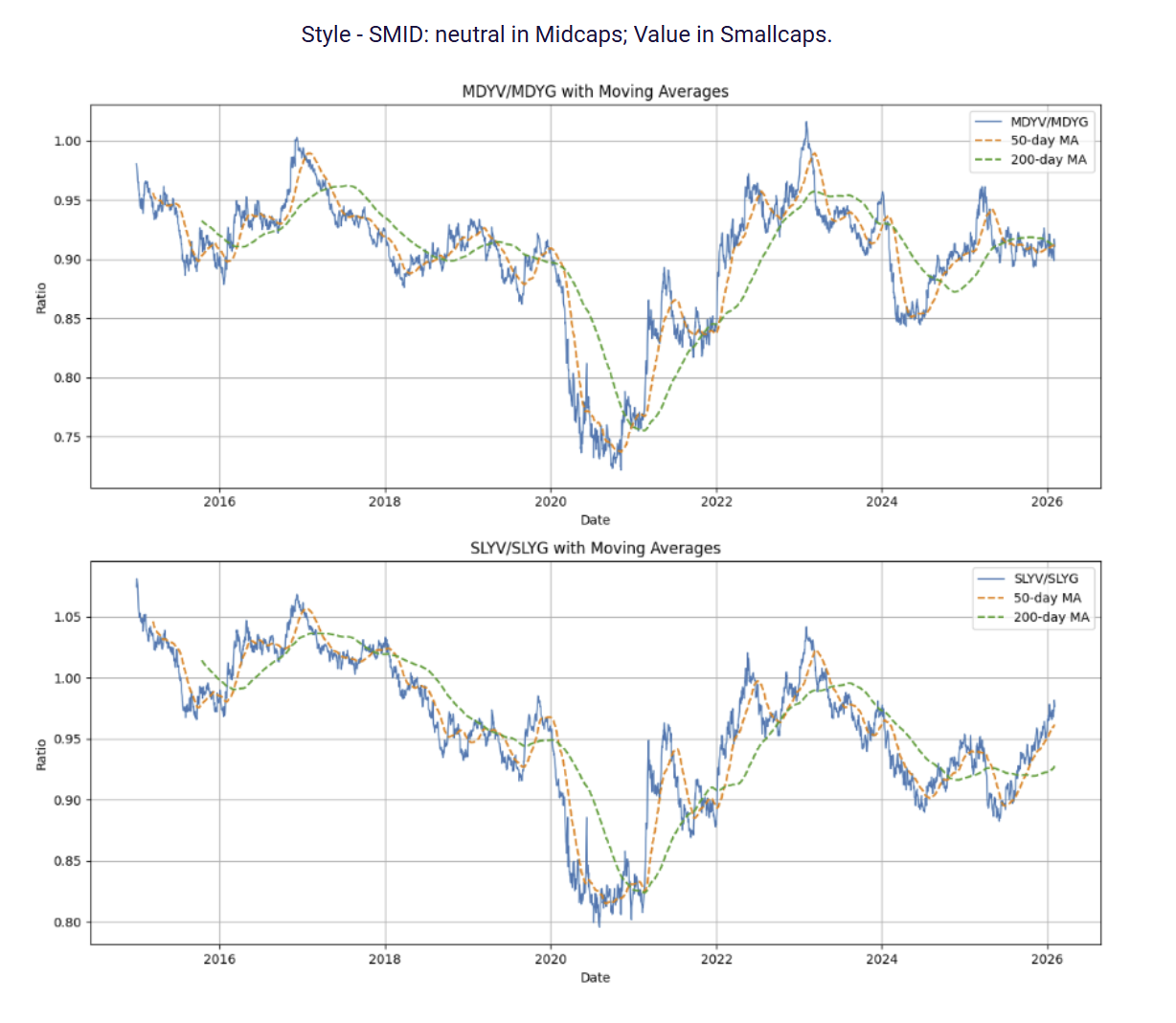
Within non-large stocks:
- Mid-caps continue to exhibit a more neutral value/growth profile.
- Small-caps continue to favor value over growth. This relationship has grown much stronger than historical trend.
Importantly, our value tilts within mid- and small-cap stocks were additive to performance and helped offset a portion of the drag coming from large-cap positioning.
Stock Selection
Stock selection alone was a modest drag on performance, but the portfolio allocation boosted performance. In other words, the stocks for which the strategy held a greater share of outperformed, while stocks making up a smaller share of the portfolio underperformed.
For example, Microsoft contributed to losses in January, but made up a small share of the total portfolio. On the other hand, McKesson, which earned high returns, made up a larger share of the total portfolio.
The top 50% of stocks whose market value contributed the most individually to the portfolio had an average positive return, while the stocks making the lowest individual contributions to total portfolio value had an average negative return.
Long-Term Performance (GIPS Composite)
While short-term results can vary meaningfully depending on market structure, the strategy’s long-term performance remains competitive versus its benchmark.
Compliance Disclosure:
The Size and Style Responsive (SSR) Tax Aware strategy includes all institutional and retail portfolios that invest in a portfolio of stocks in large, mid, and small cap companies. The strategy seeks to manage after-tax returns by incorporating tax considerations into trade decisions. For example, when possible, the strategy may defer realizing short-term gains to achieve long-term tax treatment, subject to client-specific constraints and objectives. Tax impact is a factor in implementation, but it does not override the strategy’s investment objectives.
Burney Advisor Services affirms compliance with the Global Investment Performance Standards (GIPS®) and has prepared this chart in accordance with these standards. As of February 2, 2026, the benchmark for the SSR Tax Aware shifted from the Russell 3000 Index to the S&P 1500 Index, and this change applies to all reporting periods. The characteristics of the equity holdings in the S&P 1500 Index better match those of the SSR Tax Aware than those of the Russell 3000. The S&P Composite 1500 Index combines stocks in the S&P 500, the S&P MidCap 400, and the S&P SmallCap 600. The inception date of the strategy is March 1, 2018.
Past performance, whether actual or hypothetical, does not guarantee future performance. Investment results and principal value will fluctuate, and clients' investments, when redeemed, may be worth more or less than their original cost. This communication is exclusively for investment advisors and financial professionals and is not intended for clients or the investing public.